













 Overview of the International Symposium of the 26th Asia Pacific Forum, Awaji Conference Japan
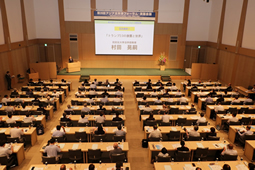
- Program
-
- Date:
Friday, August 1 2025
10:30~17:00 - Location:
Awaji Yumebutai International Conference Center
(1 Awaji-shi, Hyogo, Japan) - Theme:
"Thirty Years Since the Great Hanshin-Awaji Earthquake and the Asia-Pacific Region: Conflict, Cooperation, and Inclusion" - Details:
- ○Opening Address
- Minoru Makimura
- (Representative Director, Asia Pacific Forum, Awaji Conference Japan)
- ○Introduction of the 24th Asia Pacific Research Prize Winners
- ○Commemorative Lectures
-
◆Commemorative Lecture 1
- "The Trump 2.0 Shockwave and the World”
- Speaker:Koji Murata (Professor, Faculty of Law, Doshisha University)
-
◆Commemorative Lecture 2
- "Thirty Years of Economic Engagement between Japan and the Asia-Pacific Region”
- Speaker:Shigeyuki Abe (Advisor, Hyogo Earthquake Memorial 21st Century Research Institute)
- ○Keynote Proposals
- 1.“Can We Overcome This Century of Conflict?”
- Speaker:Keiko Yoshioka (Columnist and Editorial Committee Member, The Asahi Shimbun)
- 2.“Japanese Society and Gender: A Society That Does Not Utilize Women Has No Future”
- Speaker:Chizuko Ueno (Professor Emeritus, the University of Tokyo / Chairperson, Women’s Action Network / Representative Director, Chizuko Ueno Foundation)
- 3.“Looking Back on the 30 Years of Recovery from the Great Hanshin-Awaji Earthquake and Preparing for Future Disasters”
- Speaker:Yoshiteru Murosaki (Professor Emeritus, Kobe University)
- ○Parallel Sessions
- Group 1:“Confronting the Changing International Order”
- Moderator:Kai Kajitani (Professor, Graduate School of Economic, Kobe University)
- Group 2:“Inclusion (Gender)”
- Moderator:Sachiko Kubota (President, Ashiya University (Incorporated Educational Institution Ashiya Gakuen) / Professor Emeritus, Kobe University)
- Group 3:“Cooperation in an Earthquake Disaster”
- Moderator:Yutaka Katayama (Professor Emeritus, Kobe University and Kyoto Notre Dame University)
- ○Reflecting on 25 Years of the Awaji Conference
-
A look back at the 25-year history of the Awaji Conference through a slideshow of commemorative photos.
- ○Presentation of Certificates of Appreciation to Distinguished Contributors
- ・For Distinguished Service
-
Mr. Satoshi Iue (Former Representative Director, served until 2022)
Iue Memorial Foundation
Mr. Makoto Iokibe (Former Representative Director, served until 2024)
Mr. Shigeyuki Abe (Chair of the Awaji Conference Planning and Research Committee)
Mr. Yutaka Katayama (Chair of the Asia Pacific Research Prize Selection Committee)
- ・For Sponsorship
-
Suntory Holdings Limited
SYSMEX CORPORATION
UCC Japan Co.,Ltd
WADAKOHSAN CORPORATION
- ○Acceptance Remarks
-
Mr. Toshimasa Iue
Ms. Sayaka Yasui
Mr. Takenao Wada (WADAKOHSAN CORPORATION)
Mr. Manabu Kurata (SYSMEX CORPORATION)
-
Mr. Toshimasa Iue
- ○Summary and Acknowledgements
- Shigeyuki Abe(Advisor, Hyogo Earthquake Memorial 21st Century Research Institute)
- ○Opening Address
- Date:
- Commemorative Lecture 1:The Trump 2.0 Shockwave and the World
- Koji Murata (Professor, Faculty of Law, Doshisha University)
- Commemorative Lecture 2:Thirty Years of Economic Engagement between Japan and the Asia-Pacific Region
- Shigeyuki Abe (Advisor, Hyogo Earthquake Memorial 21st Century Research Institute)
- Keynote Proposal 1: Can We Overcome This Century of Conflict?
- Keiko Yoshioka (Columnist and Editorial Committee Member, The Asahi Shimbun)
- Keynote Proposal 2: Japanese Society and Gender: A Society That Does Not Utilize Women Has No Future
- Chizuko Ueno (Professor Emeritus, the University of Tokyo / Chairperson, Women’s Action Network / Representative Director, Chizuko Ueno Foundation)
- Keynote Proposal 3: Looking Back on the 30 Years of Recovery from the Great Hanshin-Awaji Earthquake and Preparing for Future Disasters
- Yoshiteru Murosaki (Professor Emeritus, Kobe University)
- Parallel Session 1: Confronting the Changing International Order
- Moderator:Kai Kajitani (Professor, Graduate School of Economic, Kobe University)
- Parallel Session 2: Inclusion (Gender)
- Moderator:Sachiko Kubota (President, Ashiya University (Incorporated Educational Institution Ashiya Gakuen) / Professor Emeritus, Kobe University)
- Parallel Session 3: Cooperation in an Earthquake Disaster
- Moderator:Yutaka Katayama (Professor Emeritus, Kobe University and Kyoto Notre Dame University)
■Overview of Commemorative Lectures■
1. What has been put in the movie Superman
The new movie Superman criticizes contemporary anti-immigrant sentiment through its protagonist, an immigrant from the planet Krypton, while symbolically portraying the fragmented information environment. At its core, the story carries a sense of hope for the United States as a country where immigrants can thrive. However, the reality is that, because the filmmakers are seen as part of the liberal “woke” crowd, the film’s message is unlikely to reach Trump supporters. This work highlights how the film’s themes themselves are confronting the deep social and political divisions in the United States.
2. How many times will the U.S. era end?
The current crisis in the United States can be seen as a return to the turmoil of the early 1970s, when the country was shaken by defeat in the Vietnam War and the Nixon Shock. The idea that “the American era is ending” has long been debated, and today’s situation is also a kind of déjà vu of past crises. Moreover, as historian Ferguson has pointed out, the postwar liberal international order is little more than an idealized image of the past that does not fully correspond to reality. Previous presidents have never explicitly described the United States as the “world’s police officer,” and it is important not to romanticize the past too much as a time when the U.S. alone maintained world order. Rather than being overly pessimistic about the present, what is needed is a calm perspective that can assess the historical context of the crises facing the United States.
3. Weak points of the Trump administration
The foundation of Trump’s administration is fragile. His reelection in 2024 was a narrow victory, won by only a small margin in key swing states, and his approval ratings have been declining since taking office amid public backlash over rising prices and foreign policy issues. Although Republicans control both houses of Congress, the margins are especially thin in the House of Representatives, and signs of disunity are increasingly apparent. The fact that legislation is not advancing and the administration is relying on executive orders instead is actually exposing the weakness of the administration, while strong pushback from states such as California is also serving as a major check on its power.
Time is running out for Mr. Trump, as the Constitution bars him from seeking a third term. If he loses the congressional majority in the 2026 midterm elections, his administration is likely to become a lame duck in the second half of his term, leaving him in a difficult position.
4. Difficulty of evaluating President Trump
Some of Mr. Trump’s words and actions, though they may appear extreme, contain a certain degree of political rationality. His proposal to buy Greenland is based on securing Arctic shipping routes and on security concerns regarding China and Russia, and it is an idea that past presidents have also explored. Domestically, he has adopted a calculated strategy of appealing to his base by denouncing “reverse discrimination against whites,” while on NATO he has pressed allies to increase their defense spending, forcing them to confront the uncomfortable truth that their own social welfare is being supported by the United States’ burden. These actions can be said to reflect a cold calculation of both appeal to his supporters and national interests.
5. Contradictions of the Trump administration
The Trump administration’s policies are riddled with serious contradictions on multiple fronts. Economically, it has adopted an inefficient approach of conducting bilateral negotiations separately with some 60 countries, and it has fallen into a structural contradiction in which inflationary pressure caused by tariffs and tax cuts intended as an economic stimulus are producing a large fiscal deficit.
Moreover, the close relationship with Elon Musk exposed two fundamental contradictions in the administration. First, while taking a hard line against China, the administration’s reliance on a businessman heavily dependent on the Chinese market shows how vaguely its China strategy is defined. Second, the coexistence of Musk, a symbol of highly skilled immigration indispensable to growth in the AI and IT sectors, and the administration’s core anti-immigrant base leaves unanswered the question of how immigrants should be defined as a nation.
Furthermore, the proclaimed “America First” doctrine has also been transformed into “Trump First,” as shown by actions such as the bombing of Iran, which runs counter to campaign promises, making it clear that in practice the administration prioritizes Trump’s own authority over the nation’s interests.
6. What is Trumpism?
Trumpism stems from inequality and immigration issues, and it is a structural movement that will continue even after Mr. Trump himself is gone. This movement needs to be understood in terms of its goals and the methods used to achieve them. While more than half of the public supports goals such as deporting undocumented immigrants, many oppose the harsh methods used to carry them out.
Therefore, if existing political parties and allied countries can present an alternative that achieves the goals Mr. Trump advocates through more moderate and effective means, there may be a possibility of pushing back against Trumpism. Political evaluations change over time, and it is also important to recognize that today’s assessment is not the final word.
7. Future world and the U.S.
In the current political situation in the United States, it is becoming increasingly common for presidents to be replaced after a single four-year term, and there is a possibility that the political cycle will accelerate. In particular, the 2028 presidential election will mark the beginning of a “post-Trump era,” in which Trump’s departure will bring about one of the largest generational shifts in American history and usher in a rejuvenation of society as a whole. During this period of major upheaval, the ability to effectively reach out to the next generation of leaders will become an intense competition that determines the fate of each country.
For Japan to prevail in this competition and negotiate with a self-righteous United States, it is essential to maintain its own values while also possessing the ability to create a “narrative” that is easy for the other side to accept. As seen in the Nippon Steel-US Steel takeover case, where Mr. Trump reacted to the word “investment” rather than “merger,” the ability to redefine context without changing the substance is something that must be pursued by both the public and private sectors.
8. Creating a narrative and eliminating overthinking
In uncertain times, it is necessary to cultivate what Takumi Sato calls “negative literacy,” the ability to refrain from making hasty judgments in complex situations and to tolerate ambiguity. It is also important, as Nakae Chomin argued, to avoid extreme optimism and pessimism and to maintain a spirit of moderation. In this “post-Superman era,” when no all-powerful hero will come to save us, we are called upon to abandon excessive assumptions and contribute to the maintenance of global order through steady cooperation and persistent effort.
1. The era of fixed exchange rates
The postwar global economy was stabilized by dollar-gold convertibility and fixed exchange rates, but it entered a period of instability with the shift to floating exchange rates following the Nixon Shock and the two oil shocks in the 1970s. Even amid such headwinds, Japan achieved rapid economic growth and rose to become the world’s second-largest economy after the United States.
In Japan as Number One, Ezra Vogel identified several factors behind Japan’s success: a high-level education system, skillful industrial policy led by the Ministry of International Trade and Industry, stable labor-management relations under lifetime employment, and a high degree of social order. By contrast, economist Paul Krugman analyzed Asia’s growth as “extensive growth” driven by the massive input of capital and labor without technological innovation, and he took a critical view, arguing that its sustainability was limited.
2. Japan-U.S. trade friction in the 1980s
From the 1980s through the 1990s, as Japan’s trade surplus with the United States expanded, protectionist pressure from the U.S. increased in sectors such as automobiles and consumer electronics. The Nakasone administration introduced measures to promote imports and, through the U.S.-Japan Structural Impediments Initiative, sought to correct the imbalance, but it did not lead to a fundamental resolution. One underlying factor was the sharp appreciation of the yen following the 1985 Plaza Accord. As the exchange rate surged from around 240 yen to the dollar to roughly 120 yen, Japanese firms lost their international competitiveness and, in order to survive, actively expanded foreign direct investment (FDI) into Asian countries.
This shift increased local employment and capital investment by Japanese firms in those countries. However, because the model was one in which intermediate goods were exported from Japan and assembled locally, Japan’s export volume remained at a high level. Moreover, since Japan-branded products manufactured locally were re-exported to the United States, the trade surplus with the U.S. continued structurally, and friction did not subside. During this period, Chinese companies, following Japan’s lead, also began investing in Asia, marking a historical turning point in the development of production networks within the region.
3. Trump 1.0 Global Economy
During the Trump administration’s first term (2018–2020), the administration adopted a policy of rejecting the Obama administration’s approach outright and launched a U.S.-China trade war, imposing tariffs of up to 25 percent on Chinese goods as a symbol of that stance. However, this policy was overly fixated on headline export statistics and failed to adequately reflect the realities of today’s complex global supply chains.
Take the iPhone, for example. In trade statistics, it is counted as an “export from China to the United States,” but much of the high-value work—such as planning and development, the production of key components, and sales and services—is carried out by the United States, Japan, Europe, and other advanced economies. The assembly process performed in China is located at the bottom of the “smile curve,” where value creation is lowest, and despite the large trade surplus figure, the reality that much of the actual profit flows back to the U.S. side was overlooked.
In addition, to avoid the high tariffs, Chinese firms increasingly shifted production bases to Mexico and ASEAN countries. This created unintended structural changes, including windfall gains for countries that happened to benefit from the shift. Overall, the Trump administration’s trade tensions focused only on the export source of the final product, but unless one properly understands Asia’s production networks centered on intermediate goods, it is difficult to assess the true policy effects.
4. Progress of FTAs
In recent years, the framework of free trade agreements (FTAs) in Asia has made significant progress toward broader regional integration.
First, the CPTPP, which was led by Japan after the U.S. withdrawal, has evolved—following the accession of the United Kingdom—into an advanced and wide-ranging framework centered on the Asia-Pacific region. Meanwhile, the ASEAN-led RCEP is a massive agreement involving Japan, China, South Korea, Australia, and New Zealand, forming one of the world’s largest economic blocs, accounting for roughly 30 percent of global GDP, population, and trade.
While such market integration has advanced, strengthening supply chain resilience has also become an urgent issue. In particular, the massive floods in Thailand in 2011 exposed the vulnerability of global supply networks when Japanese manufacturing bases in the country were hit by the disaster. In response to this lesson, companies strengthened risk management by diversifying procurement across multiple countries, developing databases that cover secondary and tertiary supply networks, and building emergency supply systems among their own facilities.
Together with FTA-driven tariff elimination and market harmonization, these efforts have become an important driving force accelerating the rebuilding of production networks in Asia and the creation of supply chains that are resilient to disasters and political instability.
5. Asia's declining birthrate and aging population
Rapid population aging and declining birthrates are serious challenges in Asia. In many countries, the fertility rate has fallen below 2.1, the level needed to maintain population size, making population decline and aging unavoidable. Japan has attracted attention as a precedent, having seen its birthrate decline in the 1960s and entered an aging society in the 1990s. Looking ahead, labor shortages and faster aging are expected in countries such as Malaysia and Vietnam as well, making early reform of social security systems and labor market development urgent, based on the experience of Japan and others.
6. About the Trump tariffs
The reason behind President Trump’s imposition of high tariffs was his strong dissatisfaction with the fact that the United States had a large trade deficit in goods. He disregarded the surplus in service trade and focused only on the balance of goods trade. Likewise, his repeated demands that the Federal Reserve cut interest rates were aimed at lowering rates and inducing a weaker dollar, thereby boosting the export competitiveness of American products. Taken together, these actions can be seen as a consistent effort to place the highest priority on protecting manufacturing.
7. What Japan should do
To respond to changes in the global economy and shifts in social structure, Japan will need five strategic initiatives.
First is strengthening economic security. Japan must move away from excessive dependence on specific countries and increase its autonomy by diversifying supply chains. Second is labor market reform. Japan’s gender pay gap stands at 22 percent, nearly twice the OECD average, making it essential to correct bias. It is urgently necessary to create an environment in which older workers and foreign workers alike can participate on equal terms with wages commensurate with their productivity. Third is expanding the digital foundation. Japan must rapidly advance infrastructure development and human resource training with the AI era in mind in order to secure competitiveness. Fourth is leadership in multilateral frameworks. Japan is expected to maintain the CPTPP and RCEP and play a leading role in international negotiations. Finally, Japan must address exchange-rate volatility and giant corporations. It is important to consider mechanisms such as a Tobin tax to curb sharp currency fluctuations and to build an international regulatory framework for giant firms such as GAFA, whose economic power rivals that of states.
■Overview of Keynote Proposals■
In 2003, amid growing tensions in Japan-China relations over issues such as visits to Yasukuni Shrine and the Senkaku Islands, I met the late Professor Makoto Iokibe while serving as The Asahi Shimbun’s correspondent in China. The two lessons I received from him, as a member of the Japanese side in the Japan-China dialogue, have guided my career as a journalist.
One was the view that China should not be seen as a simple choice between competition and coexistence, but rather that Japan should seek a path of competing while coexisting. The other was the view that the question is not whether Japan should choose Asia or the United States, but that, for Japan as a country located in Asia, the two are inseparable, and the task is to think about how to reconcile apparently conflicting elements.
This effort to seek “both” is an important question for Japan’s current challenges and remains an indispensable perspective for grasping complex developments from multiple angles in difficult times. As Professor Iokibe taught, Japan must continue to ask not whether to choose one or the other, but what can be done to reconcile both, while remaining aware of changes in the global structure and engaging with China—and indeed with the wider world.
Recently, I entered Laos by using an international railway built by China. Laos is strongly influenced by both the United States and China, and this in turn highlights the role Japan can play there.
China has brought economic benefits to Laos through railway development based on its vision of a vast economic sphere, but it has also left the country with a heavy debt burden. China itself has begun to restrain lending, wary of falling into a “nonperforming loan trap.” The United States, on the other hand, left Laos with the world’s largest number of unexploded ordnance casualties after its bombing campaigns during the Vietnam War. This long-neglected problem has received expanded support since the Obama administration in 2016, and the United States is now the largest donor for unexploded ordnance clearance.
Southeast Asian countries have come to realize the selfishness of both the United States and China, each acting according to its own convenience. As tensions intensify, they are seeking risk-hedging partners so as not to become overly dependent on any single major power. For Laos in particular, where China has strong influence, Japan has become an important option.
At the same time, as changes of administration in the United States cause shifts in aid policy, requests for Japanese cooperation are increasing in fields such as health, the environment, and unexploded ordnance clearance, where China is politically and operationally less able to engage. In a world where trust in the United States is wavering and the balance of power among major countries is shifting, how Japan engages and demonstrates its own presence has become a major challenge.
As the economic scale of the United States and China expands, Japan’s GDP has stagnated, but in per capita GDP the United States still far outstrips China. Given this gap in national power, the prevailing view is that China is unlikely, at this stage, to pursue a decisive confrontation with the United States or risk severe economic damage.
By 2050, however, the Global South is expected to grow to a scale that surpasses the influence of both the United States and China, dramatically changing the structure of the world. These countries are closely watching the major powers in anticipation of their own rise, but in Japan there remains a gap with the perception that they are still objects to be guided.
Feelings toward China are complex in Japan: 90 percent of people do not feel a sense of closeness to China, yet 70 percent still regard the development of Japan-China relations as important. Precisely because of this situation, as Professor Iokibe once taught, Japan is called upon to build relations strategically from the perspective of how to get along well and reconcile both sides, while assuming tension will always exist.
In ASEAN countries, China is generally recognized as having the greatest economic and political influence, and in choosing between the U.S. and Chinese camps, the two powers are in fierce competition. Meanwhile, Xi Jinping’s administration places “national security” at the top of its priorities and has strengthened institutional controls and restrictions on foreigners, affecting exchange and mutual visits—for example, Japanese researchers have been reducing travel to China.
China aims to become a great power comparable to the United States by 2049, and it is advancing a strategic narrative that positions itself as the “representative of the Global South” and a “builder of world peace.” Under these circumstances, Japan is called upon to respond calmly and maintain a balance between cooperation and caution toward China.
Specifically, it is essential to continue the multilayered exchanges that Japan has cultivated over time at the local, industry, and academic levels, and to make efforts to deepen understanding of Japan as a country. Exchange is not a magic remedy that can immediately prevent conflict, but it does provide the foundation for mutual understanding as neighbors. In addition, discussions of economic security should not be limited to China; from a multipolar perspective that is not overly dependent on the United States, Japan must continually update what it needs to protect. Japan must also move beyond a stance rooted in its former economic advantage, travel more actively to countries in Southeast Asia and elsewhere, deepen its understanding of their circumstances, and continue dialogue in words that resonate with them. In a changing global environment, Japan is being asked to engage proactively with a broad perspective.
1. The current labor situation for women in Japan
Japan’s Gender Gap Index ranking remains low, at 118th place. The main reason is the small number of women in managerial positions, leaving many women unable to hold well-paid posts. Although the female labor force participation rate exceeds 70 percent and is higher than in Europe and the United States, this largely reflects the rise in dual-income households as a way to make up for stagnating male wages. While labor force participation has advanced, qualitative and economic disparities still remain.
2. Nearly 60% of working women are in non-regular employment.
About 60 percent of working women are employed in non-regular jobs, and the “L-shaped” employment structure, in which it is difficult to return to regular employment after leaving the workforce for childbirth or other reasons, is a major challenge. Wages for non-regular workers are low, at only about one-half to two-thirds of those for regular workers, creating an unreasonable “status gap” without any rational basis. During the COVID-19 pandemic, this disparity hit hard, exposing the contradiction that women, who are more likely to be non-regular workers, have become “vulnerable to disaster.”
3. Gendered social classes
Over the past 40 years, Japan has seen the emergence of a vast “underclass,” especially among young people and single-person households, and gender has functioned as a class structure. This is a man-made disaster brought about by the simultaneous advance of deregulation in employment and the lack of effective enforcement of gender equality laws. A system that structurally excludes women has become entrenched, and gender has become a root cause of inequality.
4. Stratification of women into three layers
In 1985, the Equal Employment Opportunity Law was enacted at the same time as the Worker Dispatch Law and the Category 3 insured-person system, marking the starting point for gender inequality and poverty among women. Systems such as the spouse deduction tied women to “supplementary household labor,” resulting in poverty among older women due to low wages and low pensions. This structure divided women into three layers—as labor, as caregivers, and as a workforce to be managed—and served as a mechanism for maintaining the male breadwinner model, highlighting a serious structural problem that continues into the present day.
5. Sexism is a man-made disaster brought about by politics.
Japanese-style employment (lifetime employment and seniority-based wages) is a structurally gender-discriminatory system that excludes women. The “Japanese-style management for a new era” proposed by the Japan Business Federation (Keidanren) in 1995 divided workers into three groups and expanded non-regular employment, but this can be seen as a policy failure driven by a “male alliance” among government, business, bureaucrats, and labor to preserve vested interests. The externality of this gender discrimination—the erosion of women’s motivation and ability—has come back as a heavy burden for Japanese companies today. As a result of prioritizing a homosocial organizational culture, Japanese firms have lost international competitiveness due to their lack of diversity. The economic stagnation, including being overtaken by Germany in GDP, is analyzed as an inevitable outcome of the structural exclusion of women over the past 40 years.
6. Issue of redistributing reproduction expenses
As women have increasingly entered the labor force, there are three options for relieving them of “care responsibilities”: public provision as in the Nordic countries, marketization as in the West (with reliance on immigrants), and dependence on grandparents as in Asia. Japan today, however, is caught in a dead end where none of these options is really available. Because it is difficult to reach agreement on higher social burdens, immigration has not progressed, and nuclear families cannot rely on extended-family support, the burden falls overwhelmingly on women.
This failure to resolve the “distribution of reproductive costs” is precisely the root cause of the low birthrate common to Japan, South Korea, and Southern European countries that depend on family-based care. In Japan, while the female labor force participation rate has exceeded 70 percent, the birthrate remains low, revealing the limits of the male breadwinner model, which confines care responsibilities to the family—that is, to women. In the end, because the burden of reproduction is not eased and women are pushed into the labor market, gender functions as a class that entrenches inequality.
7. Where is Japan headed from here?
The rising cost of forming a family is the main cause of declining marriage rates and low birthrates in Asia. Breaking this trend will require either public provision of care with higher social burdens or marketization through accepting immigrants beyond exclusionary nationalism, meaning that painful and major political decisions are now indispensable.
1. Current situation in Japan
Thirty years after the Great Hanshin-Awaji Earthquake, Japan’s economic stagnation and changes in the political climate have fostered a growing reluctance to allocate public funds to disaster victims, creating a major obstacle to reconstruction. Today’s recovery efforts face challenges unique to a “super-aged society,” such as the Noto Peninsula, where the aging rate has reached 50 percent. Delays are inevitable due to resource shortages, including a drastic decline in construction workers. In addition, the passing of those who played key roles at the time is causing valuable experiential knowledge to be lost, and the lesson of the earthquake—mutual trust—has yet to become fully established as part of the social and cultural fabric. This “fading of memory,” symbolized by low participation rates in earthquake insurance and mutual aid schemes, is evidence that the ideal of mutual assistance has not been fully translated into social practice, and at this 30-year milestone, there is a need to fundamentally rethink the nature of reconstruction.
2. Perspectives for reviewing the lessons learned
Thirty years after the Great Hanshin-Awaji Earthquake, four perspectives are essential for redefining its lessons: “responsibility as a disaster-stricken area,” “self-reflection,” “social change,” and “a multifaceted perspective.” In particular, the fact that the lessons have not been applied in the Noto Peninsula earthquake should be taken seriously as the responsibility of Kobe, which failed to convey not only its successes but also its experiences of failure. We need a broad perspective that does not reduce the stagnation of reconstruction to a local problem of the affected area, but instead sees it as a structural issue facing Japanese society, which remains reluctant to invest funds.
Three universal lessons should be passed down across generations. The first is the philosophy of “disaster risk reduction.” This goes beyond simply reducing damage; it means warning against human arrogance and adopting an attitude of comparing and examining diverse options rather than pursuing zero risk. The second is “coordination and collaboration.” It is important to move beyond government-led approaches and shift toward a social system in which diverse actors are horizontally connected. The third, and most important, is “human recovery.” Rather than focusing only on physical standards such as the equipment in evacuation shelters, the fundamental principle of reconstruction should be to place each individual’s human rights first. Our responsibility is to put these lessons into social practice and pass them on to the next generation.
3. Human security and responses to complex disasters
The essence of human recovery lies in empowerment: protecting people from all forms of risk while encouraging their independence. It is essential to adopt a “disaster prevention and welfare” perspective that does not separate emergencies from everyday life, but instead treats disaster prevention, welfare, education, and related fields as an integrated whole. This also aligns with the principle of “build back better,” which seeks to correct the distortions in society that disasters have exposed. Creative recovery is not merely about restoring what was lost; it is about qualitatively transforming society itself and building a system that protects the human rights of each and every person.
4. The growing ferocity of nature and the evolution of disasters
Climate change is intensifying wildfires and floods, and compound disasters involving infectious diseases are also becoming more severe. The increasing activity of plate-boundary earthquakes around the Pacific Rim closely resembles the structure of a potential Nankai Trough earthquake, and we have entered an era in which disasters are growing larger and more complex. We are constantly facing ever-changing threats from nature.
5. Challenges for tomorrow: Evolution of disaster prevention and restructuring of the framework
As disasters grow larger and more complex, Japan’s disaster preparedness has stagnated for the past 30 years, and a fundamental transformation is urgently needed.
First, communities should shift from a “bonding” model, which relies solely on cohesion among local residents, to a “bridging” model that connects diverse people. Disaster measures should also go beyond individual initiatives such as seismic retrofitting and be grounded in a public-health approach that includes improving education and promoting gender equality. In addition, uniform distribution of relief supplies must be replaced by individualized responses that consider the diversity of disaster victims, including allergies and nationality.
Furthermore, we must seriously reflect on the fact that delays in housing reconstruction are leading to disaster-related deaths, and it is essential to improve the world’s lowest level of speed in recovery. Low public awareness of donating is also a problem, and we should be deeply concerned that preparations for a Nankai Trough earthquake, which is expected to cause as many as 300,000 deaths, have not been updated for the past 10 years.
We must move beyond relying on the government alone and rebuild the multiplier effect of “self-help, mutual help, and public help” with citizens taking the lead. This reorganization of communities is the key to saving lives from increasingly complex disasters.
■Overview of Parallel Sessions■
In Parallel Session 1, three major points were raised on the theme of Japan-China relations in an increasingly divided world order.
First, participants emphasized the importance of not viewing China as a monolith and of engaging in dialogue with people who hold diverse views that differ from the government’s position. A Chinese researcher noted that, unlike during the Cold War, people now have access to a wide range of information, and that China’s internal diversity should therefore be recognized.
Second, the discussion focused on the linkage between international conflict and domestic division. It was argued that the spread of exclusionary rhetoric within Japan is also, in part, encouraging external conflict.
Third, participants discussed the impact of technology on public opinion and democracy. A confrontational structure between social media and the established media is emerging in both Japan and China, creating a new challenge for building order.
There was broad agreement that overcoming conflict requires strengthening Japan’s economic resilience. At the same time, however, Japan’s structural challenges were also brought into sharp relief: while there was support for the general idea, opinions were divided on concrete measures such as accepting more foreign workers and introducing optional separate surnames for married couples. Overall, the discussion provided a rich forum for examining Japan-China relations by asking both for a deeper understanding of the other country’s internal realities and for change within Japanese society itself.
In Parallel Session 2, following Professor Chizuko Ueno’s presentation of the severe reality of gender inequality in Japan, participants discussed the path forward from a variety of perspectives.
The central issue was how to reduce the burden of care work and transform social structures. It was noted that if immigrant labor were used to ease the burden on women, there is a risk of creating a class society dependent on low-wage labor, raising the serious issue of how Japan should respond to the growing anti-immigrant sentiment at home. The discussion also highlighted a “gap in crisis awareness” between successful men and women. While many men tend to view the current situation as “largely working well,” the reality is that women are increasingly choosing not to marry in order to avoid the triple burden of wife, mother, and caregiver, and men too are giving up on forming families because of low wages. It was widely shared that Japanese society now stands on the brink of “a future in which no one marries.”
As for concrete solutions, some participants argued that quota systems and preferential measures for women should be pursued thoroughly, without fearing criticism of reverse discrimination. In addition, the realization of optional separate surnames for married couples, as a basic human right, was identified as an urgent issue and a symbol of Japan’s low level of gender consciousness.
As exemplified by Professor Ueno’s remark that “Just do everything we can,” the discussion emphasized the need to pursue both institutional reform and changes in awareness in the absence of a magic bullet. Participants with different positions and views engaged seriously with the difficult issue of gender, which is deeply rooted in everyday life, and the session was highly meaningful in reaffirming the need for painful but necessary decisions to transform the structure of Japanese society.
Parallel Session 3 began with a strong sense of urgency over the fact that the lessons of the Great Hanshin-Awaji Earthquake were not sufficiently put to use in the Noto Peninsula Earthquake.
First, the discussion focused on why the knowledge that had been shared after the earthquake was not passed down, and on the importance of “pre-disaster reconstruction plans” in areas where damage is anticipated. While there have been successful cases, such as in Minami Awaji City, where young researchers took the lead in formulating a plan against a backdrop of strong crisis awareness and achieved results, many organizations still face numerous challenges. For example, BCPs (business continuity plans), which have become widespread among companies, often end up being merely superficial: perfect on paper, but lacking substance in practice. This was attributed to a lack of crisis awareness on the part of companies, and it was also reported that in local communities, aging is causing the community functions needed to formulate and share evacuation plans to become increasingly impaired.
From an international perspective, it was also pointed out that Taiwan and China, having absorbed Japan’s experience, are building disaster-preparedness systems that surpass Japan’s through the use of digital transformation and state-level organizational restructuring, such as the creation of a ministry of disaster prevention. By contrast, even the establishment of a disaster management agency has not yet progressed in Japan, and some participants expressed a pessimistic view that this stagnation may reflect a broader decline in Japan’s overall national strength and economic power.
Toward the end of the discussion, however, a young female participant offered a “bright sign.” It was introduced that today’s young people are by no means inward-looking; they have a strong interest in disaster preparedness and possess a flat, open mindset—for example, being willing to learn from Indonesia, which ranks first in the World Giving Index. While facing the harsh reality of Japan’s stagnation, the discussion concluded by finding hope for the future of disaster prevention and mitigation in the initiative of young people who are not bound by outdated frameworks.

- Outline
- Project
- Awaji Conference
Statement - Annual Report
- Link
- Contact
- Home
Asia Pacific Forum / Awaji Conference Japan
c/o Hyogo Earthquake Memorial 21st Century Research Institute (HEM21)
Higashikan 6F, 1-5-2, Wakinohamakaigan-dori, Chuo-ku, Kobe, Hyogo, Japan 651-0073
Tel: 81-(0)78-262-5713 / Fax: 81-(0)78-262-5122 / E-Mail:
